Skip to content
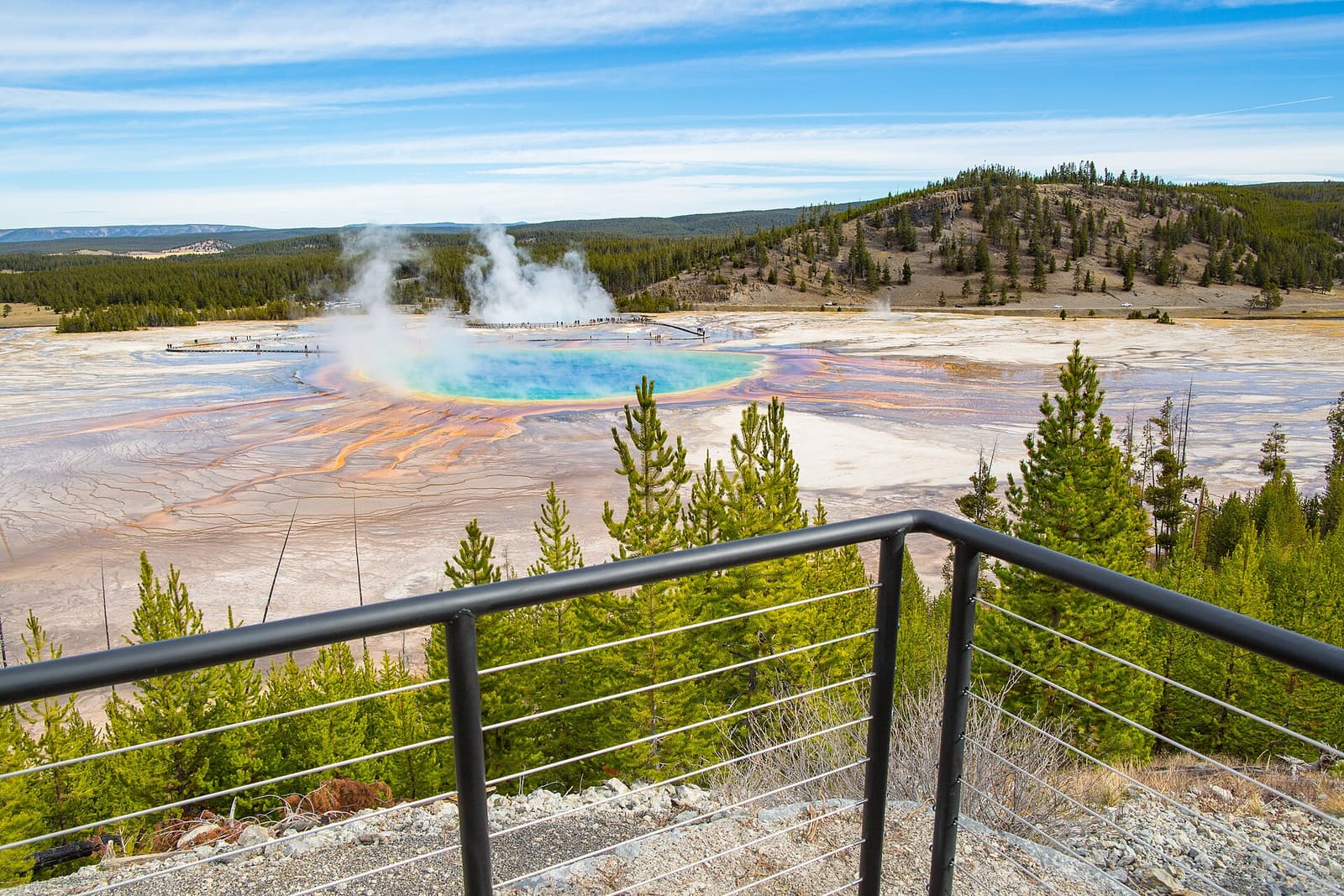
Grand Prismatic Spring seen from the overlook trail, steaming in its basin

Things to See in Yellowstone

Ten places that make a Yellowstone trip — and how they fit along the Grand Loop.

The Grand Loop Road is a figure eight about 142 miles (229 km) long, and almost everything most visitors come for lies on or near it. Think of the park in four parts: the geyser country of the west, from Norris down to Old Faithful; the canyon and the lake in the centre and south-east, with Hayden Valley between them; the northern range of Mammoth, Tower and Lamar Valley; and, just beyond the South Entrance, Grand Teton.

Each sight has its own guide below, with what to see, where to park, how long to allow, safety tips and the tours that go there.
Geyser Country (lower loop, west)

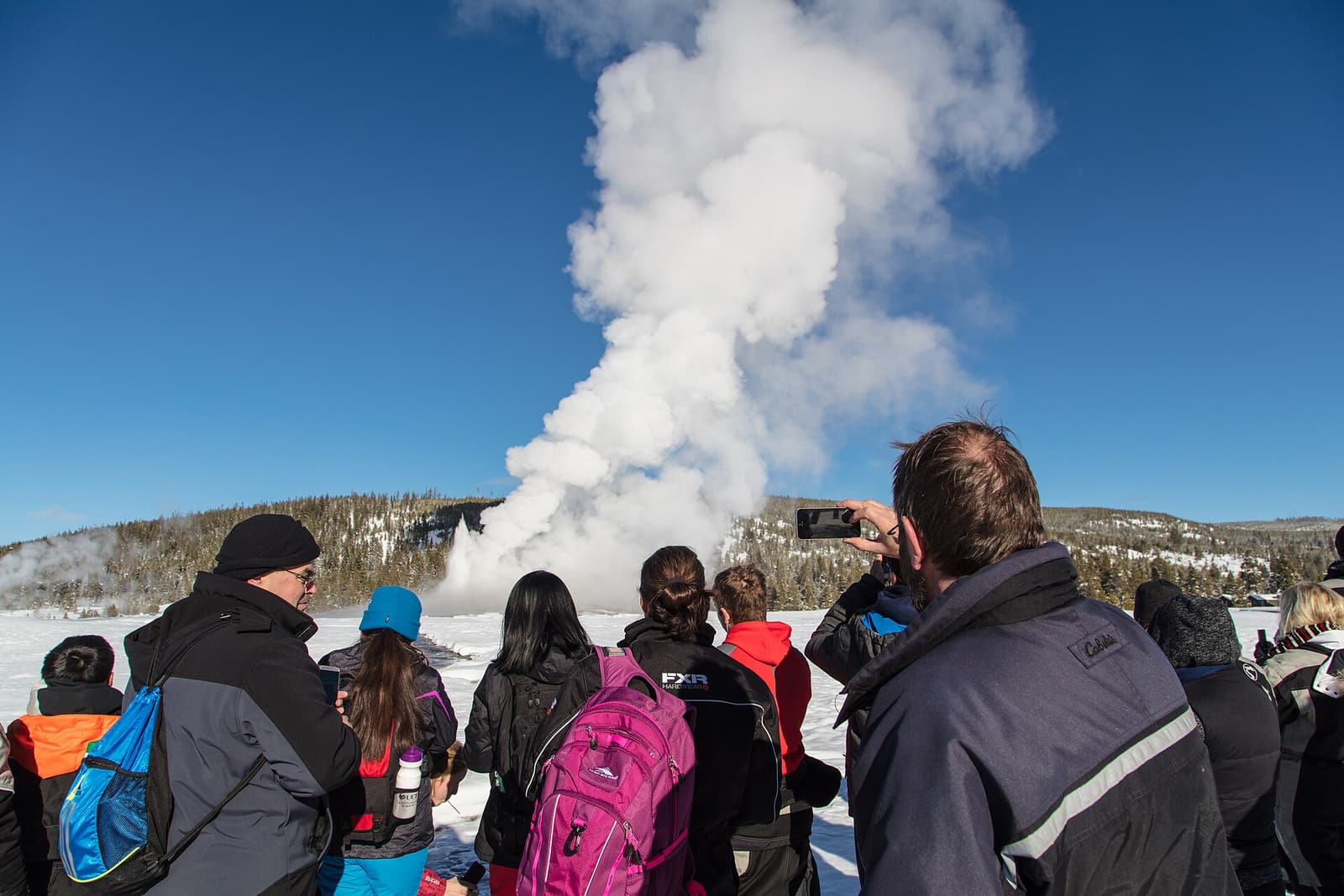
Visitors in winter coats watching Old Faithful erupt against a blue sky Geyser Country (lower loop, west)

Old Faithful & the Upper Geyser Basin

The world’s greatest concentration of geysers, and its most famous one

Old Faithful erupts roughly every hour and a half, and rangers predict each eruption. Around it, boardwalks and paved trails lead through the Upper Geyser Basin past Castle, Grand, Daisy and Riverside geysers to Morning Glory Pool — the densest cluster of active geysers on Earth.

Grand Prismatic Spring seen from the overlook platform, with steam over its blue centre and orange edges Geyser Country (lower loop, west)

Grand Prismatic Spring & Midway Geyser Basin

The rainbow hot spring — see it from the boardwalk and from above

The largest hot spring in the United States, ringed with orange, yellow and green bands of heat-loving microbes around a deep blue centre. Walk the Midway Geyser Basin boardwalk beside it, then climb the short Grand Prismatic Overlook Trail from the Fairy Falls trailhead for the famous view from above.

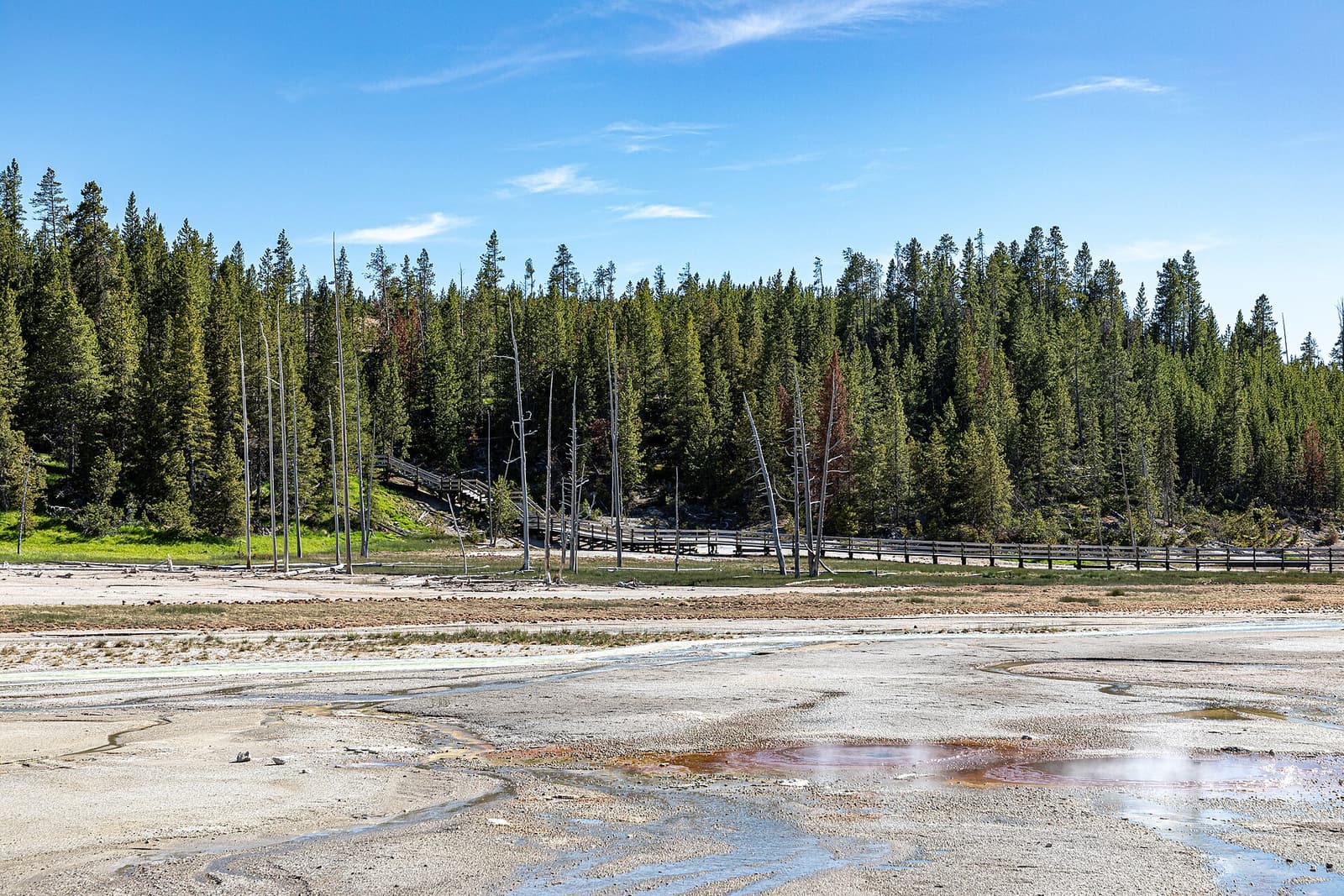
The pale mineral flats of Norris Geyser Basin with a forest of lodgepole pines behind Geyser Country (lower loop, west)

Norris Geyser Basin

The hottest, most changeable thermal area in the park

A bleached, steaming basin where the ground changes from year to year. Porcelain Basin is a milky-white sweep of vents and runoff channels; the wooded Back Basin hides Steamboat Geyser, the tallest active geyser in the world, whose rare major eruptions cannot be predicted.

Canyon, Hayden Valley & the Lake

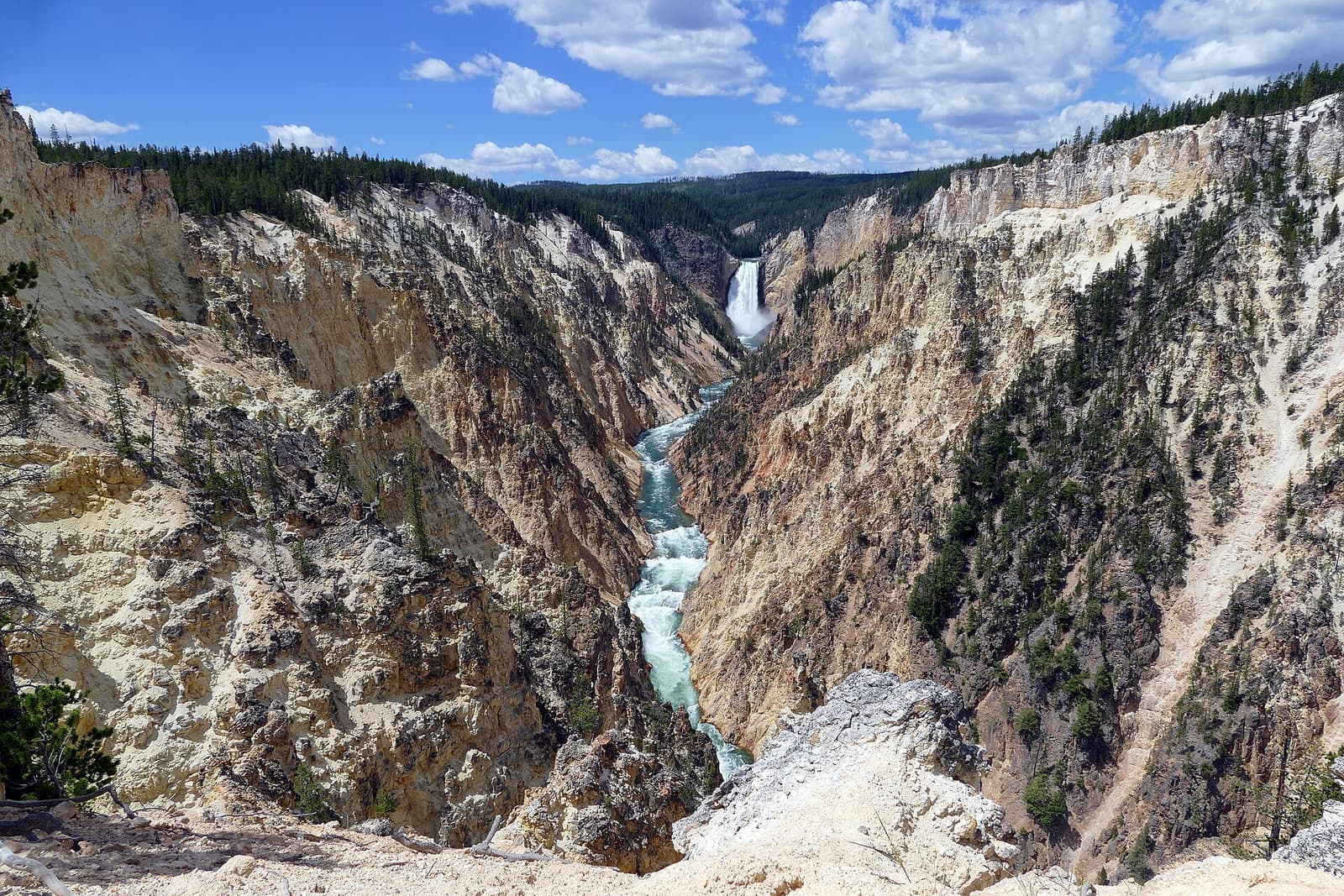
The Lower Falls of the Yellowstone River framed by the yellow walls of the canyon Canyon, Hayden Valley & the Lake

Grand Canyon of the Yellowstone

Yellow cliffs, the Lower Falls and the view from Artist Point

The Yellowstone River drops over the Upper and Lower Falls into a canyon of yellow, pink and ochre rock several hundred metres deep. Drives along the North and South Rims lead to overlooks such as Lookout Point, the Brink of the Lower Falls and Artist Point, the classic view down the canyon to the falls.

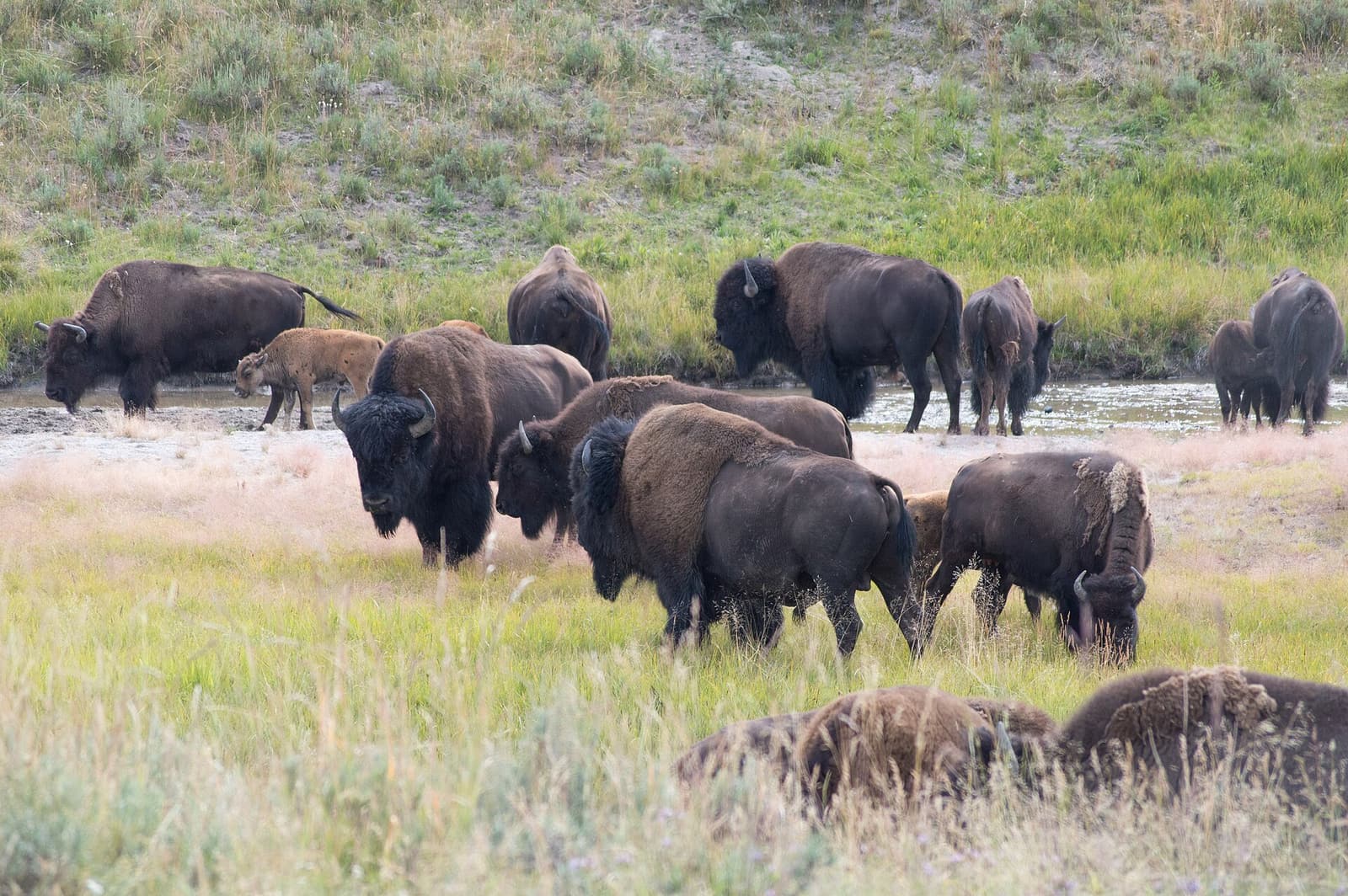
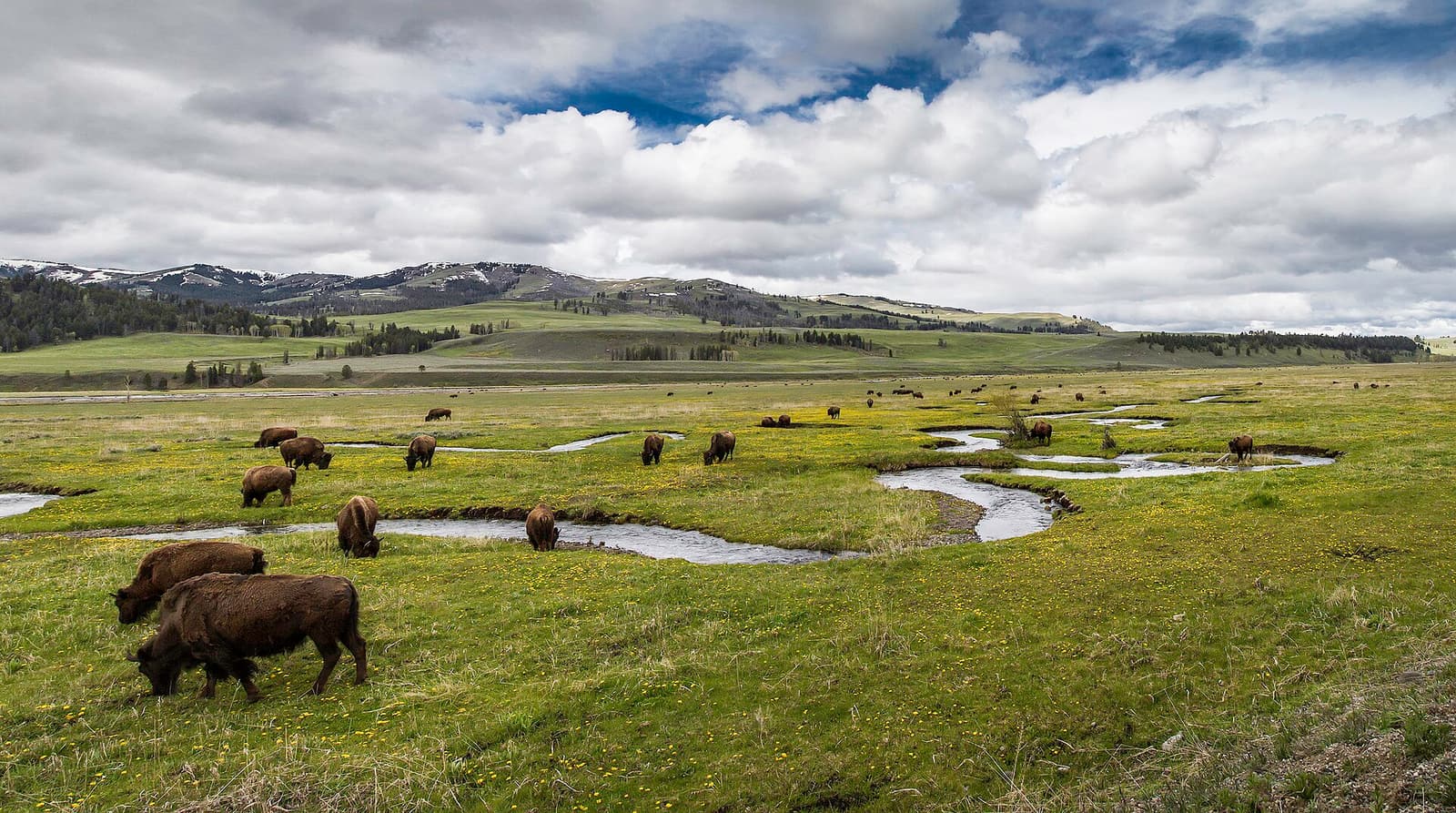
A herd of bison grazing beside a creek in Hayden Valley Canyon, Hayden Valley & the Lake

Hayden Valley

Bison herds, grizzlies and wolves along the Yellowstone River

A broad, treeless valley between Canyon and Lake where the Yellowstone River slides through meadows. It is one of the best places in the park to see large bison herds, and grizzly bears, wolves, elk, coyotes and waterbirds are seen here regularly — especially early and late in the day.

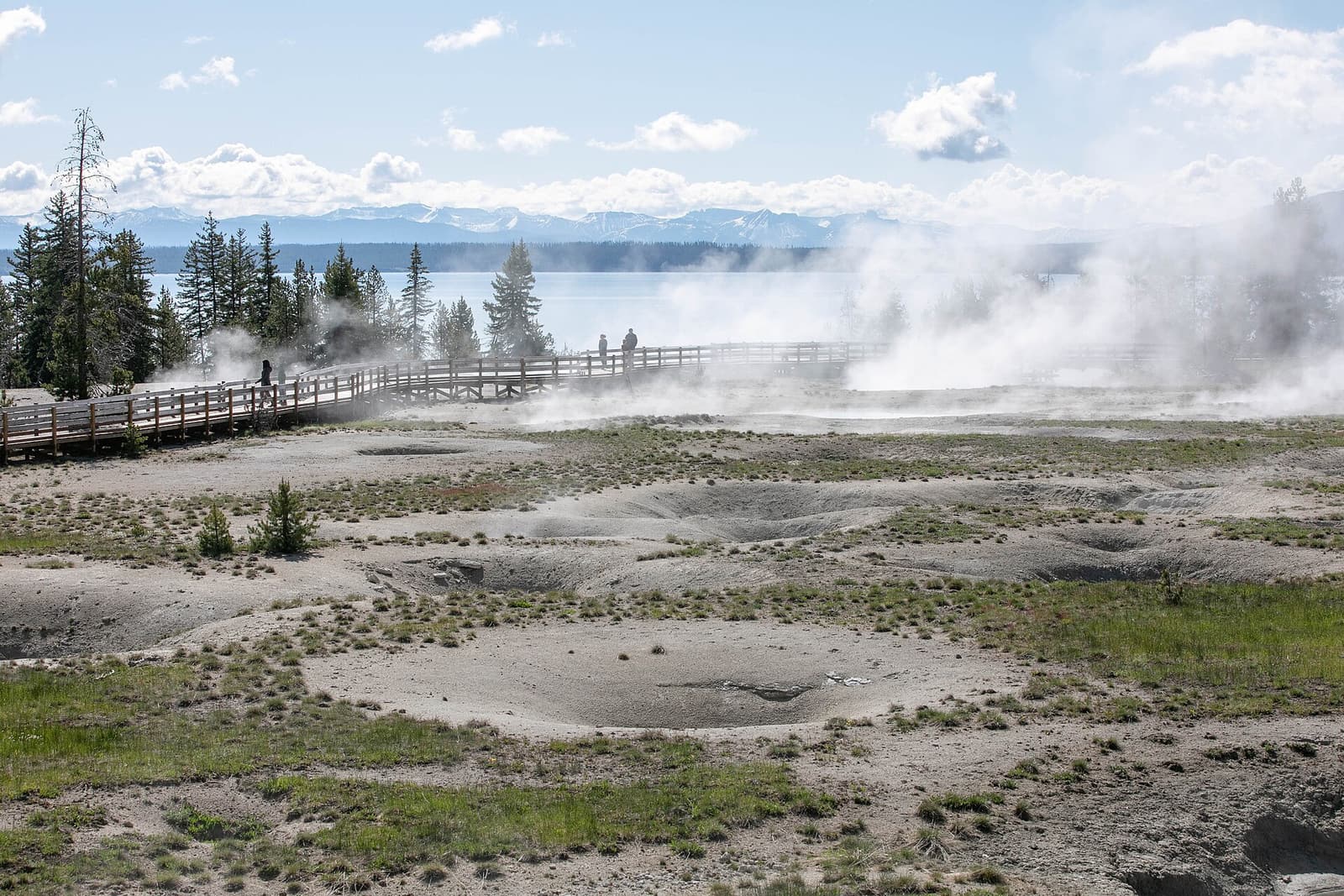
Hot springs and steam vents on the shore of Yellowstone Lake at West Thumb Geyser Basin Canyon, Hayden Valley & the Lake

Yellowstone Lake & West Thumb

A vast mountain lake with hot springs on its shore

Yellowstone Lake is the largest high-elevation lake in North America, cold even in August and frozen for much of the year. On its western bay, the West Thumb Geyser Basin sends steam over the water from springs right on the shoreline. Along the north shore are Lake Village, the historic Lake Yellowstone Hotel, Fishing Bridge and Bridge Bay marina.

Mammoth & the northern range

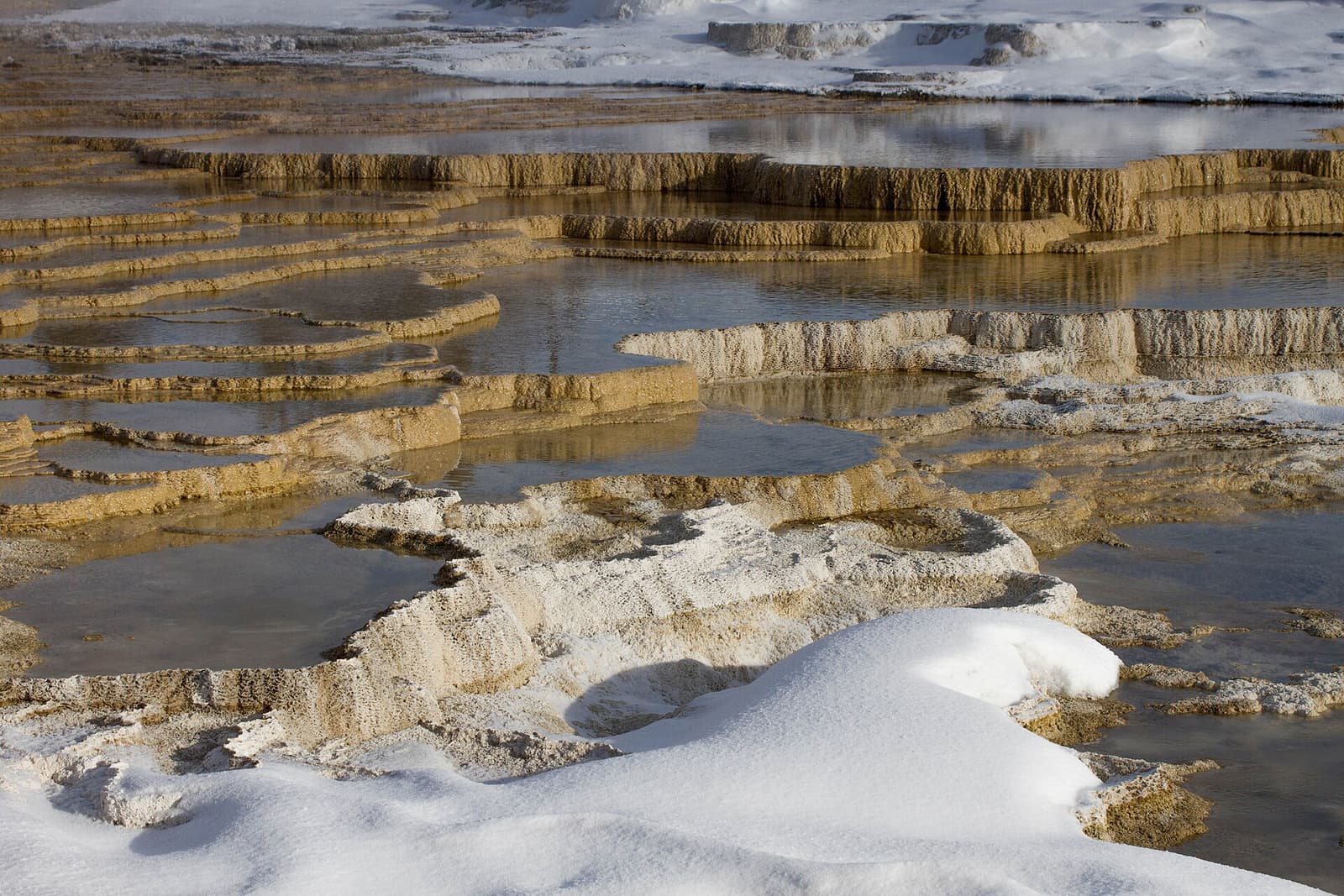
Layered white and orange travertine terraces at Mammoth Hot Springs with patches of snow Mammoth & the northern range

Mammoth Hot Springs

Travertine terraces, elk on the lawns and the park’s old army fort

Near the North Entrance, hot water rising through limestone has built a staircase of white and orange travertine terraces that shift and change from season to season. Below them sits Fort Yellowstone, the stone barracks from the decades when the US Army ran the park, now the park headquarters — with elk grazing between the buildings.

Bison grazing along a winding creek in the green Lamar Valley Mammoth & the northern range

Lamar Valley

The “Serengeti of North America” and the best place to watch wolves

A wide, open valley in the northeast corner of the park, crossed by the Lamar River and grazed by bison, elk and pronghorn. Since wolves were returned to Yellowstone in 1995, it has become one of the best places in the world to watch them, usually at a distance through a spotting scope at dawn.

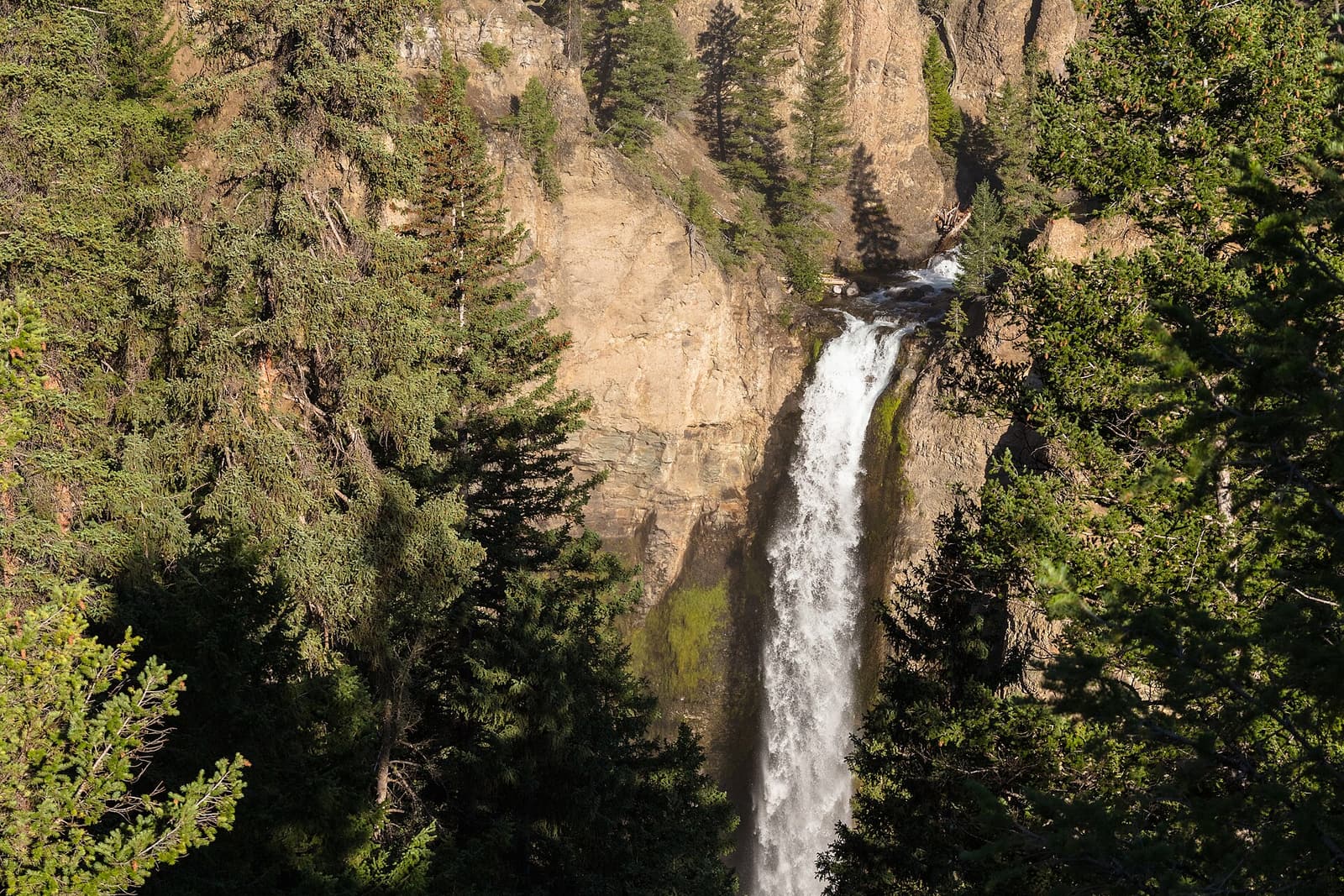
Tower Fall dropping between dark rock pinnacles in a green, wooded gorge Mammoth & the northern range

Tower Fall & Tower-Roosevelt

A waterfall between rock spires, and the gateway to the northeast

Tower Creek drops about 40 metres (132 ft) between columns of volcanic rock just before it meets the Yellowstone River. The overlook is a short walk from the parking area. Nearby Tower-Roosevelt has the rustic Roosevelt Lodge, and the road south climbs over Dunraven Pass, the highest stretch of the Grand Loop.

Next door

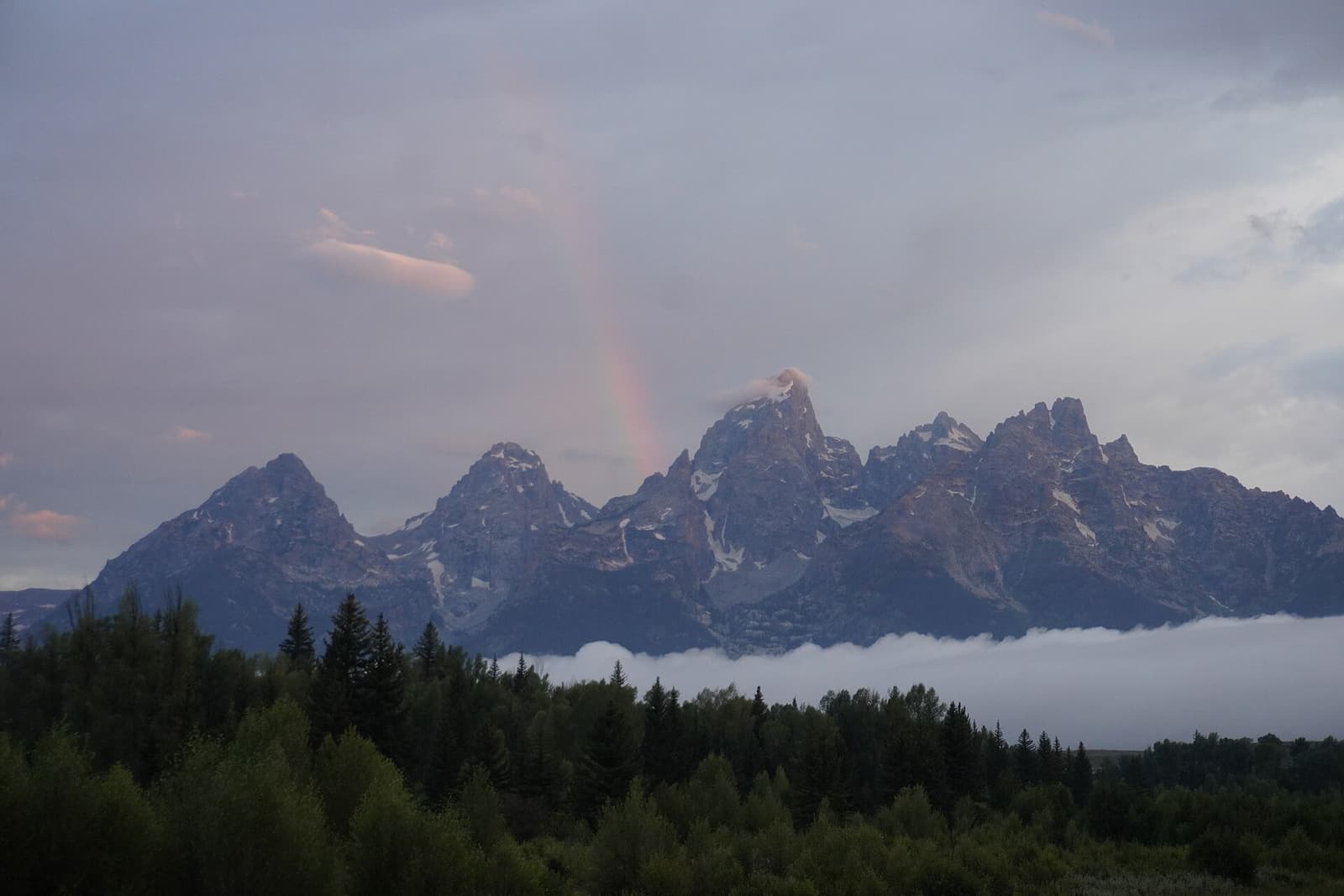
The Teton Range at sunrise, with low cloud over the forested valley below Next door

Grand Teton National Park

Jagged peaks, mountain lakes and moose — just south of Yellowstone

Ten minutes south of Yellowstone’s South Entrance, the Teton Range rises straight out of the sagebrush flats of Jackson Hole. Jenny Lake, Jackson Lake, Oxbow Bend, Schwabacher Landing and the old barns of Mormon Row are among the most photographed views in the American West, and the park is an easy day from Jackson.

How to fit them together

  • Day 1 — geysers: Old Faithful and the Upper Geyser Basin, Grand Prismatic Spring and its overlook, Fountain Paint Pot.
  • Day 2 — canyon and lake: Norris in the morning, the Grand Canyon of the Yellowstone, Hayden Valley in the evening light, or West Thumb and the lake.
  • Day 3 — the north: Lamar Valley at dawn for wolves, Tower Fall, then Mammoth Hot Springs.
  • Day 4: Grand Teton — Jenny Lake, Mormon Row, Oxbow Bend.

Driving times are longer than the distances suggest: the speed limit is 45 mph (70 km/h) at most, and wildlife jams are common. Our itineraries show realistic days, and the where-to-stay guide explains which base suits each plan.

Plan your Yellowstone trip

Summer fills up early. Lock in your guide.

Small-group day tours and wildlife safaris run with limited seats, and July and August book out weeks ahead. Compare and reserve in a couple of taps — most tours can be cancelled free of charge.