Yellowstone was established on 1 March 1872 as the world’s first national park. It covers about 2.2 million acres (8,990 km²) — larger than the states of Rhode Island or Delaware — and almost all of it lies above 7,000 feet (2,100 m). The roads reach only a small fraction of it, but that fraction includes some of the most extraordinary scenery on Earth.
How the park is laid out
The Grand Loop Road is a figure eight connecting the main areas: Mammoth, Norris, Madison, Old Faithful, West Thumb, Lake, Canyon and Tower-Roosevelt. Five roads lead out to the five entrances. The lower loop (Norris–Madison–Old Faithful–West Thumb–Lake–Canyon) has the geysers, the lake and the canyon; the upper loop (Norris–Mammoth–Tower–Canyon) has Mammoth Hot Springs, Tower Fall and the turn-off to Lamar Valley. Read our guides to the main sights.
How long to stay
- One day: only the highlights of the lower loop — Old Faithful, Grand Prismatic, perhaps the canyon. Very rushed.
- Two days: lower loop on day one, upper loop and Lamar Valley on day two.
- Three to four days: the right amount for a first visit, with time for a hike and a dawn wildlife drive.
- Five days or more: add Grand Teton, longer hikes, a boat or rafting trip.
Our day-by-day itineraries turn these into plans.
 Geyser Country (lower loop, west)
Old Faithful & the Upper Geyser Basin
The world’s greatest concentration of geysers, and its most famous one
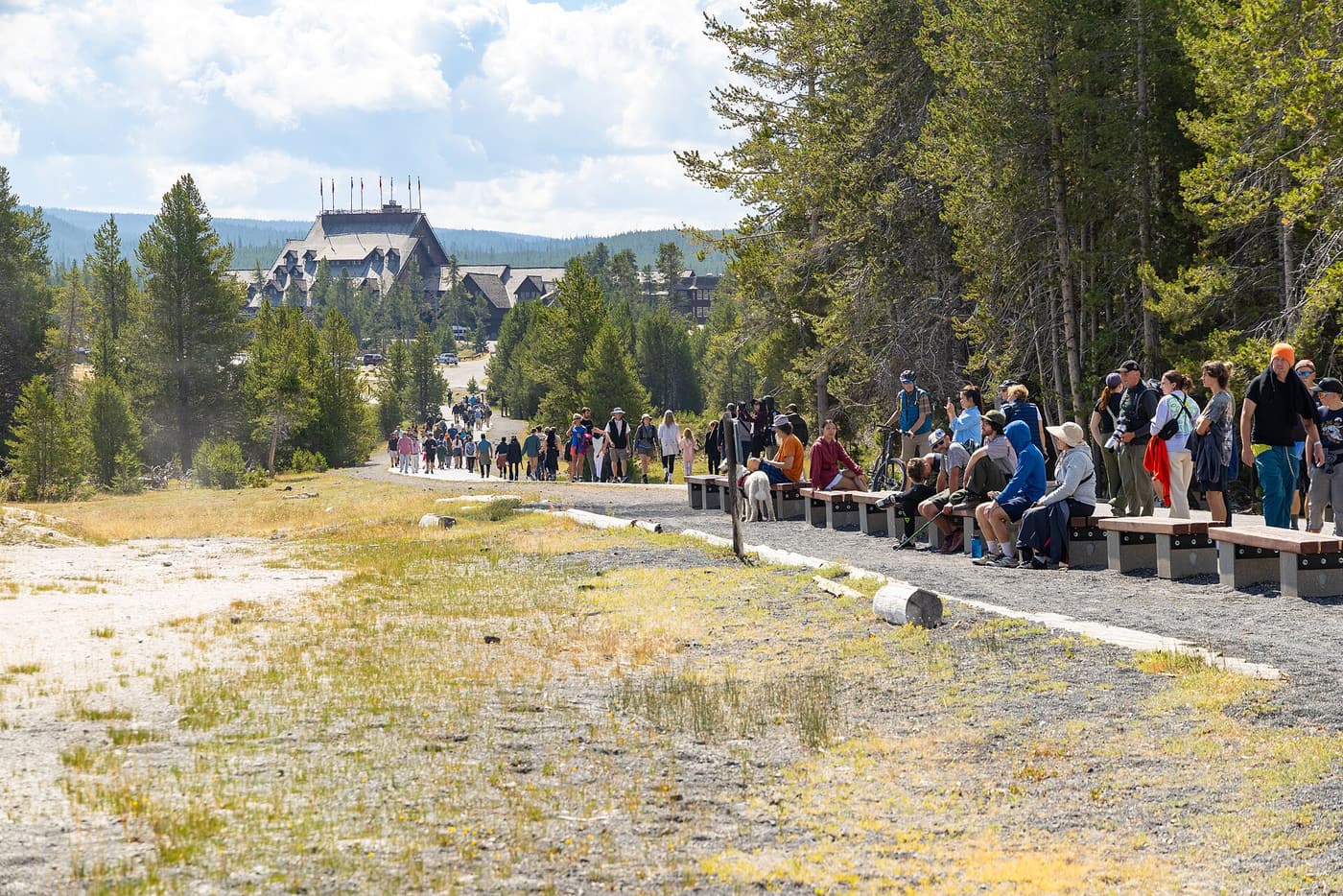
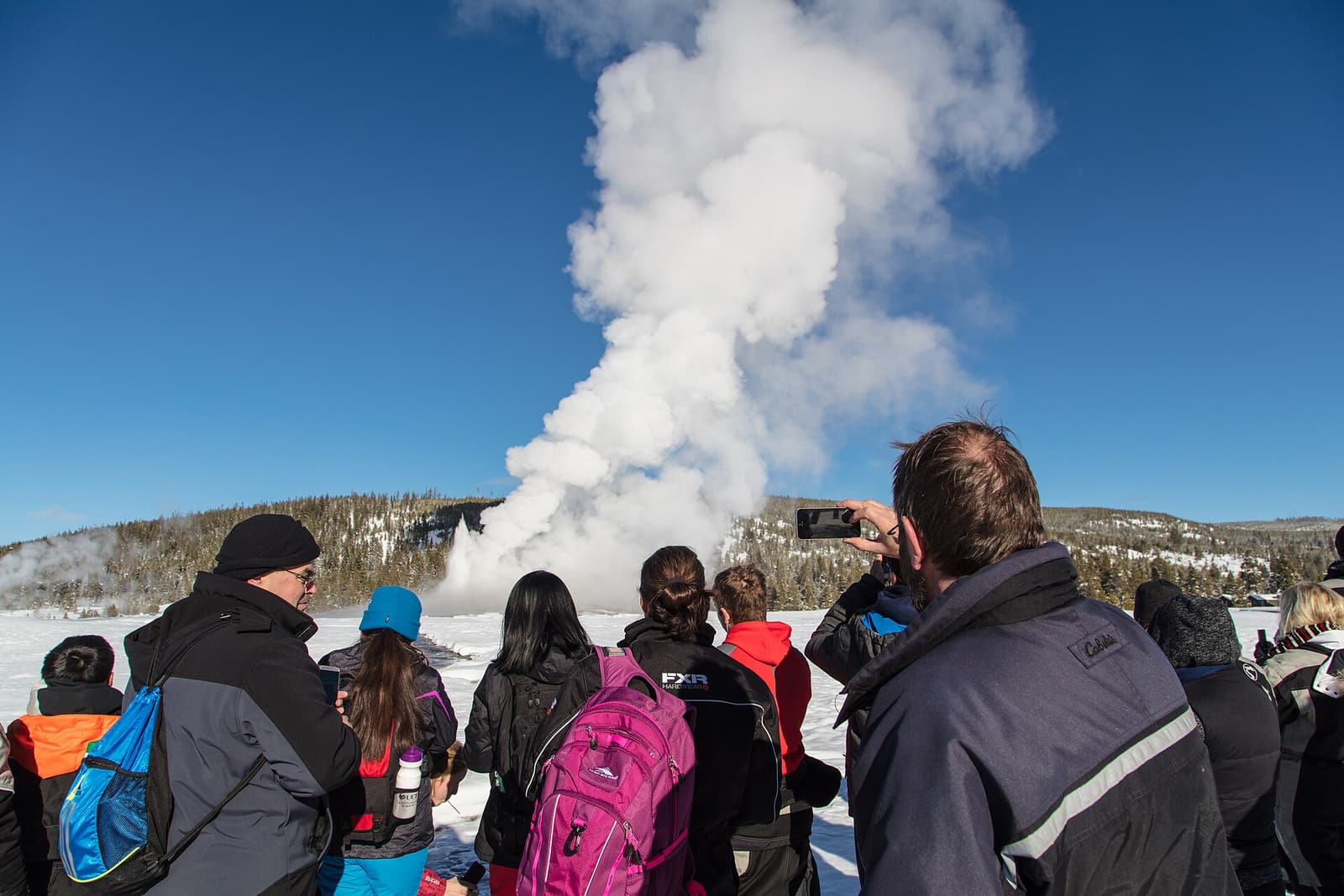
Old Faithful erupts roughly every hour and a half, and rangers predict each eruption. Around it, boardwalks and paved trails lead through the Upper Geyser Basin past Castle, Grand, Daisy and Riverside geysers to Morning Glory Pool — the densest cluster of active geysers on Earth.
 Geyser Country (lower loop, west)
Grand Prismatic Spring & Midway Geyser Basin
The rainbow hot spring — see it from the boardwalk and from above
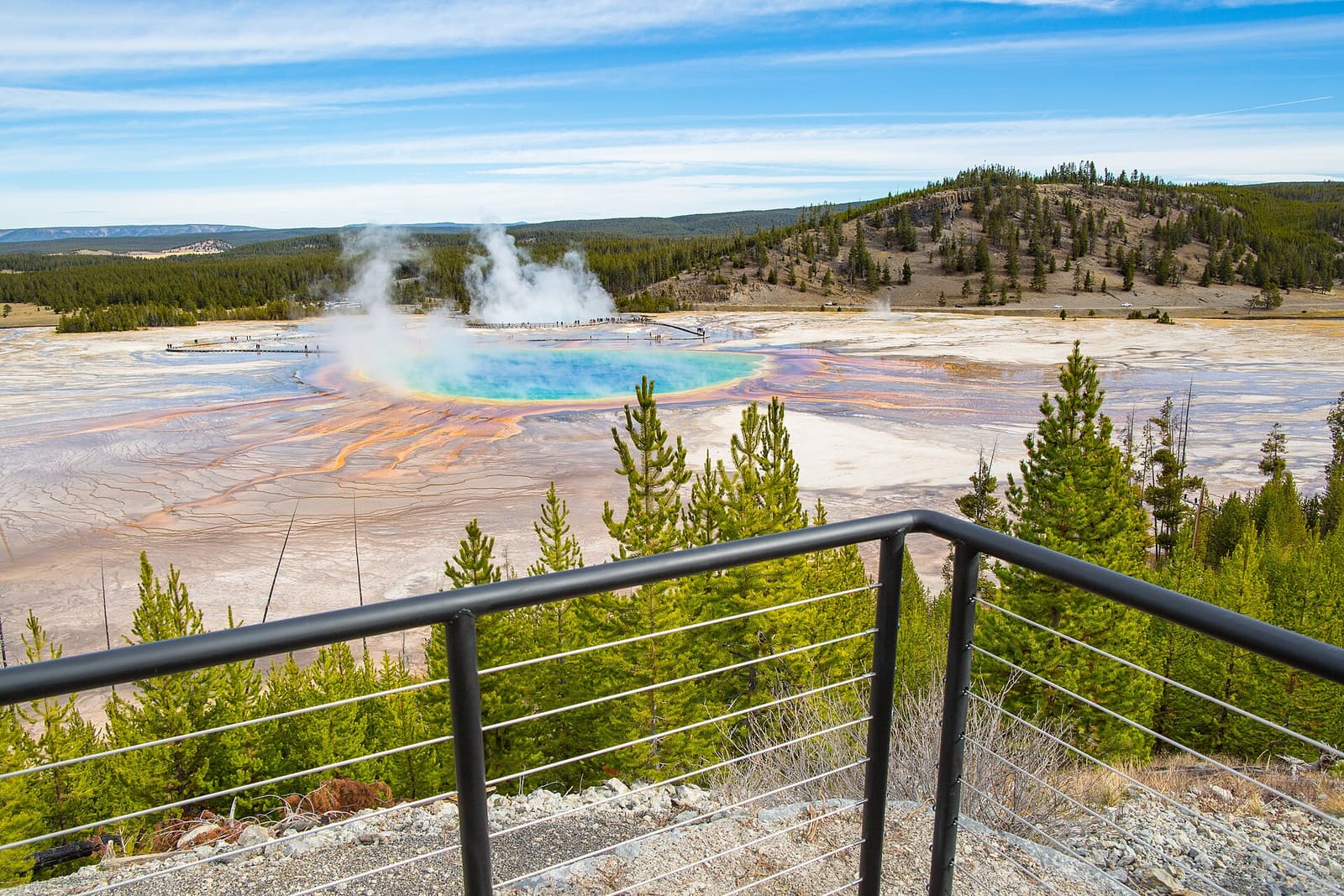
The largest hot spring in the United States, ringed with orange, yellow and green bands of heat-loving microbes around a deep blue centre. Walk the Midway Geyser Basin boardwalk beside it, then climb the short Grand Prismatic Overlook Trail from the Fairy Falls trailhead for the famous view from above.
 Canyon, Hayden Valley & the Lake
Grand Canyon of the Yellowstone
Yellow cliffs, the Lower Falls and the view from Artist Point
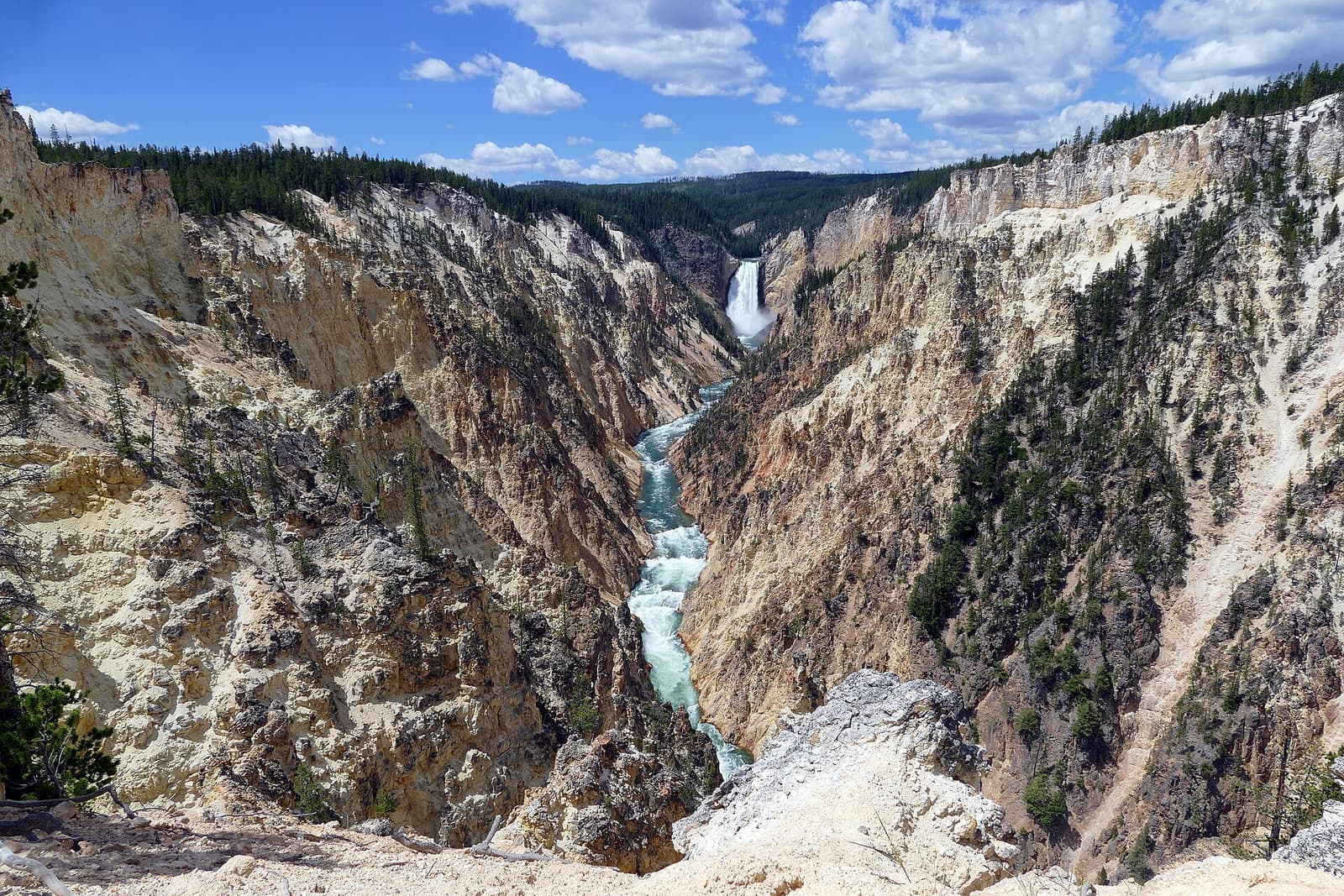
The Yellowstone River drops over the Upper and Lower Falls into a canyon of yellow, pink and ochre rock several hundred metres deep. Drives along the North and South Rims lead to overlooks such as Lookout Point, the Brink of the Lower Falls and Artist Point, the classic view down the canyon to the falls.
 Canyon, Hayden Valley & the Lake
Hayden Valley
Bison herds, grizzlies and wolves along the Yellowstone River
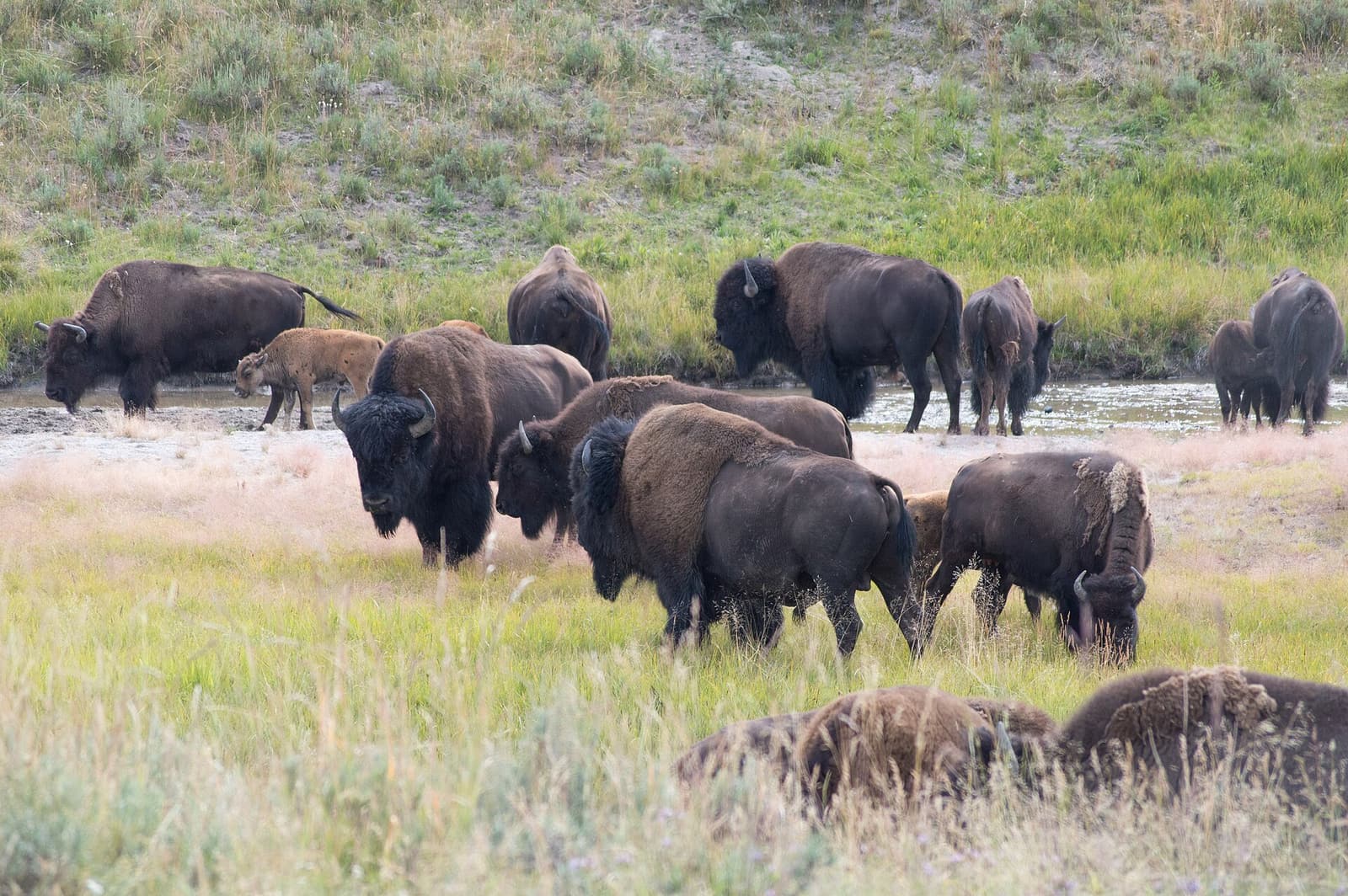
A broad, treeless valley between Canyon and Lake where the Yellowstone River slides through meadows. It is one of the best places in the park to see large bison herds, and grizzly bears, wolves, elk, coyotes and waterbirds are seen here regularly — especially early and late in the day.
Costs
- Entrance: a seven-day vehicle permit or an annual pass; since 2026 a separate per-person fee for non-US residents. Check nps.gov.
- Accommodation: the biggest cost. Summer rates in the gateway towns typically run from around $120 for a motel to $350 or more for a good hotel; Jackson is dearer. See where to stay.
- Tours: guided day tours typically cost from around $200 to $400 per person; see tours.
- Food: cafeterias, grills and general stores in the villages; meals are pricier than outside. Many visitors carry picnic supplies.
Food, fuel and services
Each village — Mammoth, Old Faithful, Grant Village, Lake, Canyon and Tower-Roosevelt — has some combination of restaurant, cafeteria, general store and, in most cases, a gas station, open roughly from May to October (with limited service in winter). There are medical clinics at Mammoth (all year) and seasonally at Old Faithful and Lake. Distances between services are long: keep the tank at least half full.
Altitude and weather
Most of the park sits between 7,000 and 8,000 feet, and passes go higher. You may feel short of breath on stairs and climbs; drink plenty of water. Weather changes fast: summer days can be warm, but mornings are often near freezing and afternoon thunderstorms are common. It can snow in any month. Bring layers, a waterproof jacket, a warm hat and sun protection.
Safety in thermal areas
Yellowstone’s hot springs have killed more people than its bears. The water can be near or above boiling and the ground around it is often a thin crust over scalding water. Always stay on boardwalks and marked trails, keep children close, never touch the water, and never throw anything in. Swimming or soaking in thermal features is forbidden.
Safety around wildlife
Stay at least 100 yards (91 m) from bears and wolves and 25 yards (23 m) from all other animals, including bison and elk. Bison injure more visitors than any other animal. Carry bear spray on any trail and know how to use it. Read our full wildlife and safety guide.
Rules worth knowing
- Drones are prohibited throughout the park.
- Pets are not allowed on boardwalks, trails or in the backcountry; they must stay within 100 feet of roads and parking areas.
- Picking up or removing rocks, plants, antlers or anything else is illegal.
- Fishing needs a Yellowstone fishing permit; backcountry camping needs a permit.
- Do not feed any wildlife, including birds and squirrels.
What to pack
- Layers: fleece, insulated jacket, rain shell, hat and gloves, even in summer.
- Binoculars (essential) and, if you are keen, a spotting scope.
- Bear spray — you cannot fly with it; buy or rent it in a gateway town.
- Water bottles, snacks and picnic food for long days between villages.
- Sunscreen and sunglasses: the sun is strong at altitude.
- Offline maps and the NPS app; a paper map is a good backup.
Beating the crowds
Yellowstone receives several million visits a year, most of them between June and September, and the famous stops get busy from mid-morning. Start very early: you will have Grand Prismatic or Artist Point nearly to yourself before 8 am, and wildlife is most active then anyway. Have lunch while everyone else is at Old Faithful, and come back for an evening eruption. September and early October are quieter and beautiful.