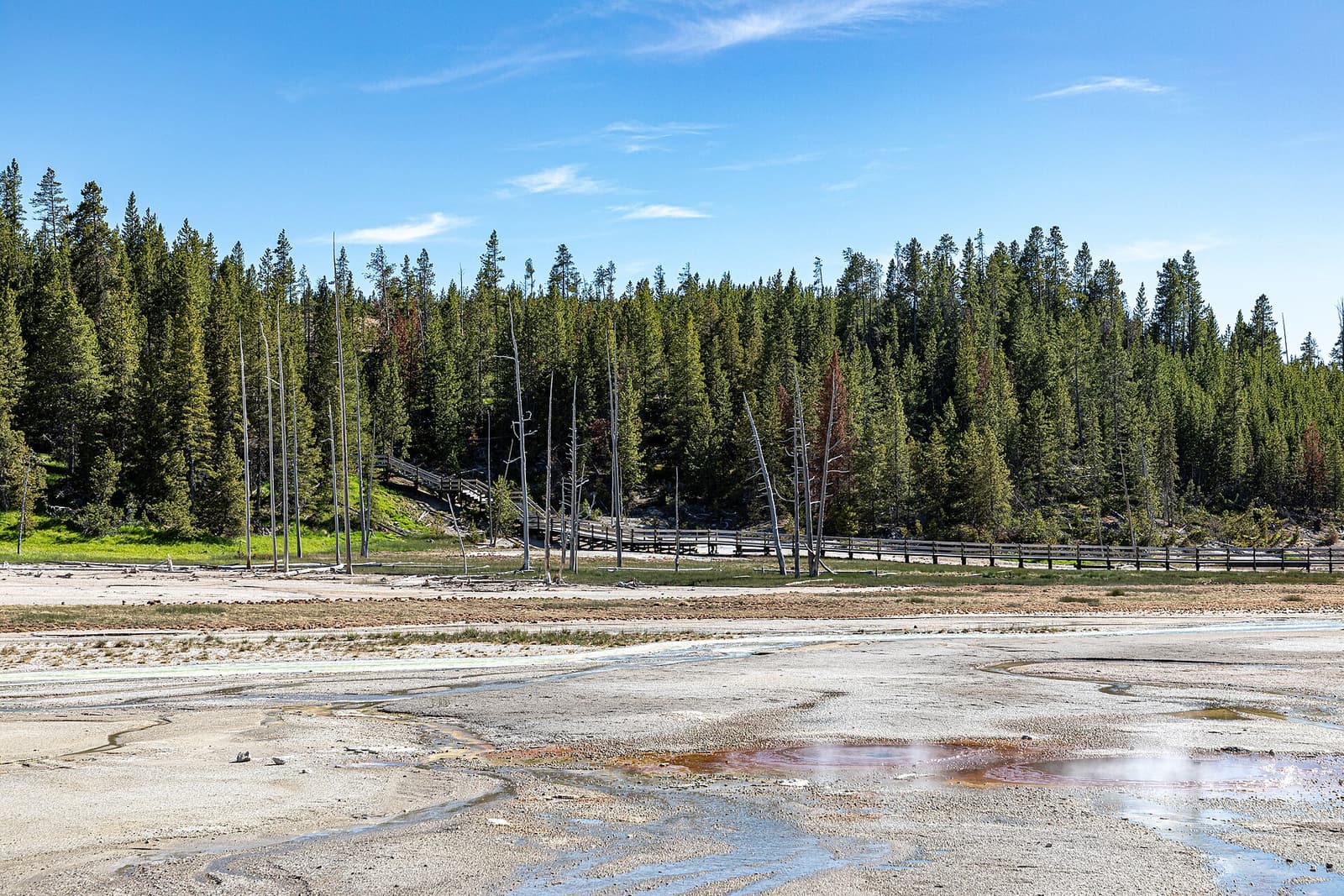
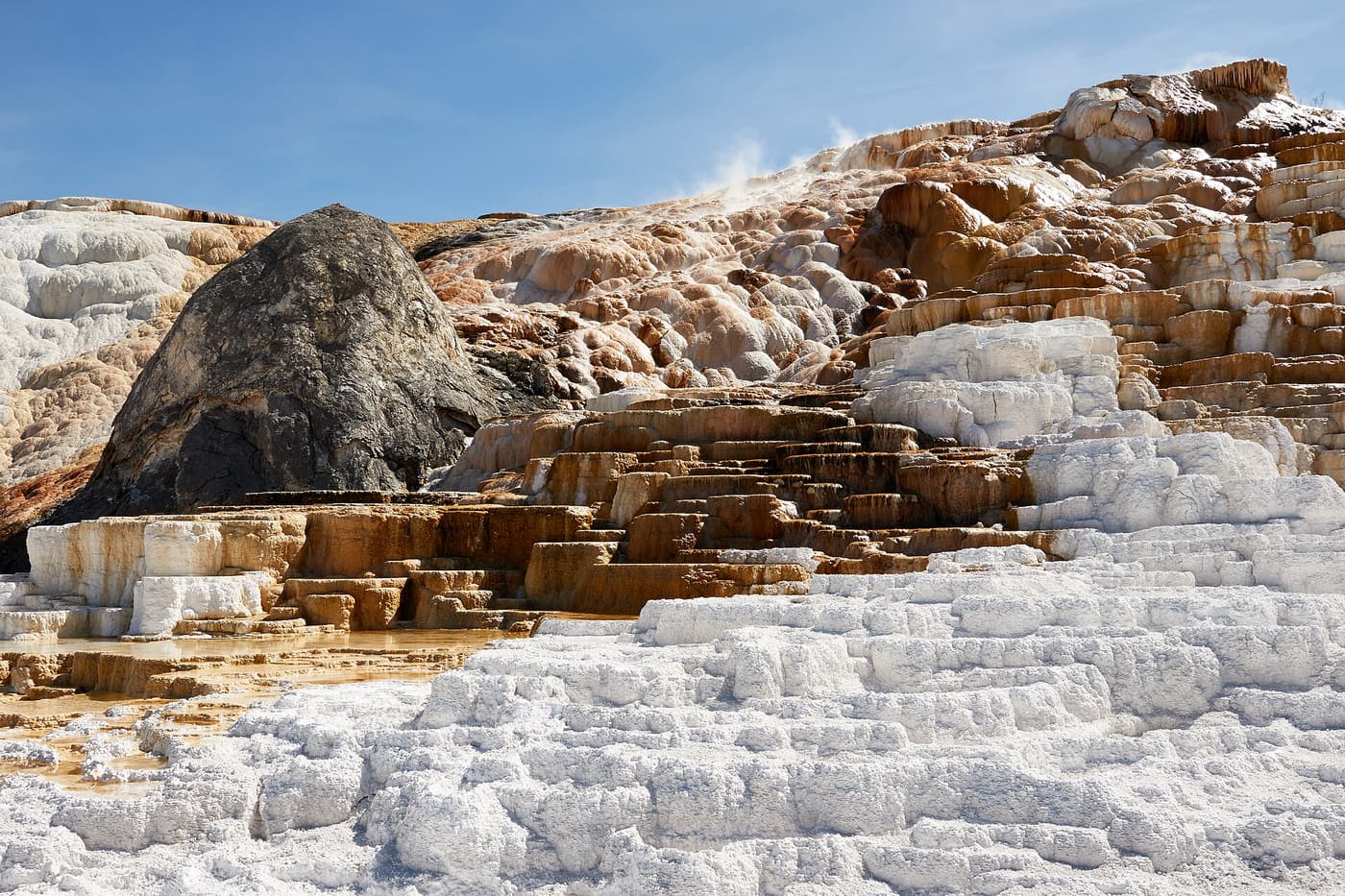
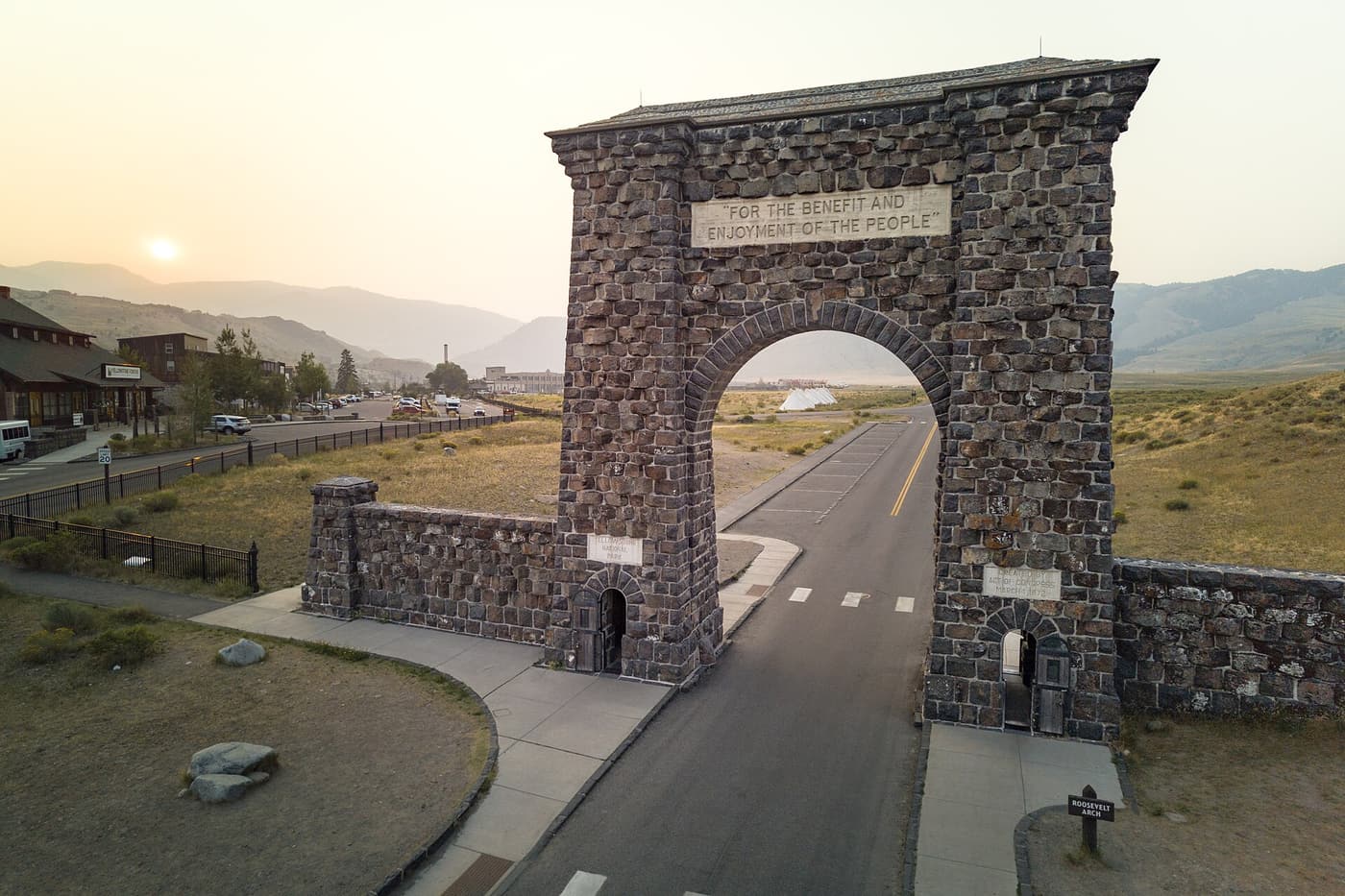
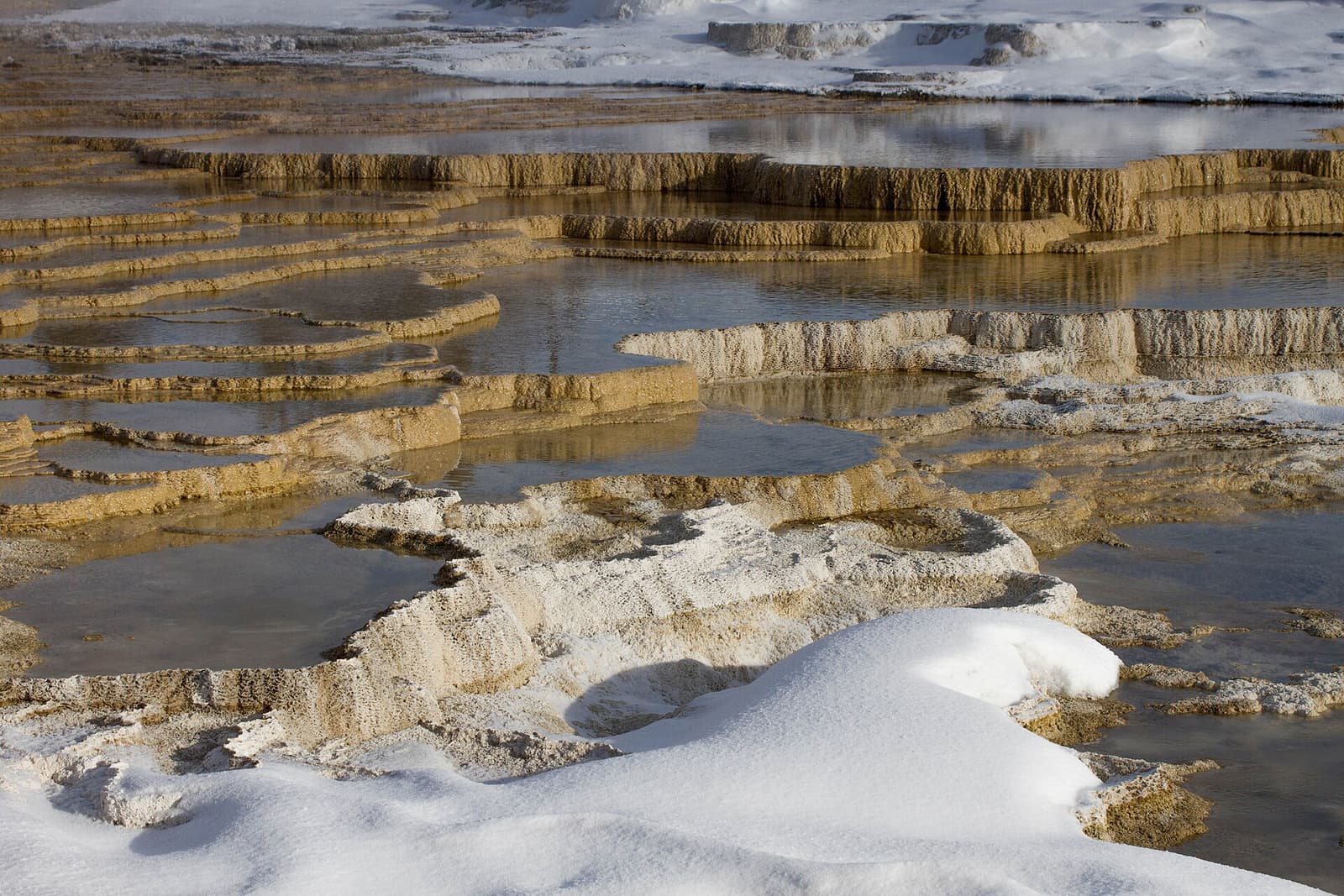
Mammoth Hot Springs, five miles inside the North Entrance, is unlike the geyser basins. Here hot water rises through ancient limestone, dissolves it, and lays it down again as travertine — layer upon layer of white, cream and orange terraces that grow, dry out and spring back to life from year to year. Some terraces are glowing and wet one season, grey and dead the next.
Mammoth is also the park’s administrative heart. The stone buildings of Fort Yellowstone date from 1886–1918, when the US Army managed the park; they now house the headquarters, and elk graze the lawns between them. Because the road from Gardiner is open to cars all year, Mammoth is the one part of the park you can reach by car in winter.
What to see at Mammoth Hot Springs
Lower Terraces boardwalks
From the lower parking areas, boardwalks and stairs climb past Liberty Cap — a 37-foot (11 m) cone of an extinct spring — and the terraces of Palette Spring, Minerva and Canary Spring. There are about 1.75 miles (2.8 km) of boardwalk if you walk all of it, with some steep stairs. Which terraces are most colourful changes each year.
Upper Terrace Drive
A short, narrow one-way loop above the main terraces (closed to large vehicles and in winter) passes Orange Spring Mound and Angel Terrace and gives views back over the valley.
Fort Yellowstone and the Albright Visitor Center
Pick up a walking-tour leaflet and wander the former officers’ quarters and barracks. The Albright Visitor Center, in the old bachelor officers’ quarters, has exhibits on the army era, wildlife and early park history.
Elk in town
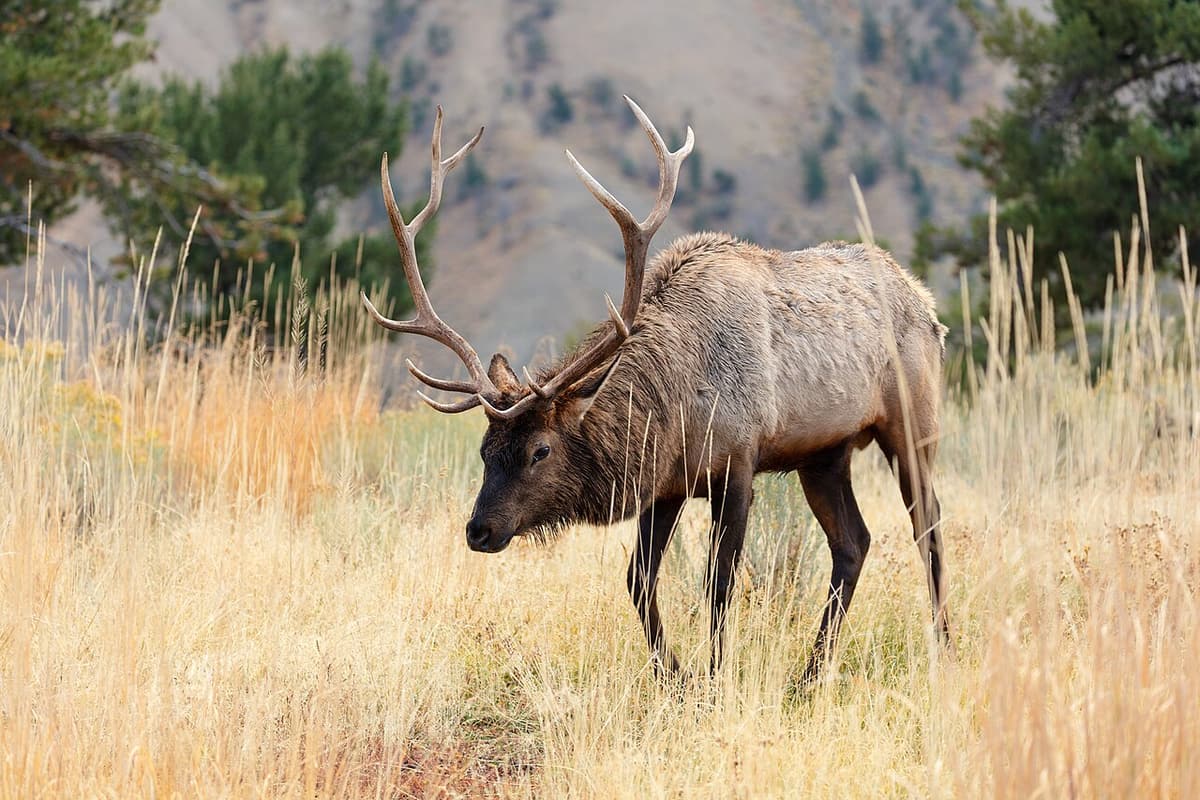
Elk live around Mammoth for much of the year. In September and October, during the rut, bulls bugle and guard harems on the lawns — spectacular, and dangerous. Rangers manage the crowds; keep at least 25 yards back and more from bulls.
Getting to Mammoth Hot Springs
- From Gardiner (North Entrance): about 5 miles (8 km); open to cars all year.
- From Norris: 21 miles (34 km) via Golden Gate and Swan Lake Flat.
- From Bozeman: about 85 miles (135 km) via Livingston and Paradise Valley, roughly 1 hour 45 minutes.
- Services: lodging, dining, a general store, fuel, a medical clinic and a post office.
Tips before you go
- The Boiling River swimming area, once a famous soak, has been closed since floods damaged the area in 2022; check its status before you go.
- Morning light on the Lower Terraces is beautiful and the boardwalks are quiet.
- From Mammoth, the road east to Tower and Lamar Valley is the best winter wildlife drive in the park.
- Gardiner, five miles away, is the base for whitewater rafting on the Yellowstone River.
Tours that visit Mammoth Hot Springs
These guided trips include Mammoth Hot Springs or pair well with it:
Small-group wildlife and nature tour from €275 Yellowstone Iconic Sights Tour - West Yellowstone & Big Sky
A full-day small-group tour of Yellowstone’s northern range, combining scenic drives with wildlife watching. The guide looks for bears, wolves and moose, and the itinerary takes in the area’s big viewpoints. Check the listing for the exact stops and pickup points.
- Yellowstone’s northern range
- Watch for bears, wolves and moose
- Small group with an expert guide
 Private guided tour from €850 per group
Gardiner: Yellowstone National Park Wildlife Guided Tour
A guided tour from Gardiner into the northern part of the park, with scenic viewpoints and wildlife such as elk, bison and deer. Priced per group, it suits families staying near the North Entrance.
- Scenic viewpoints of the north
- Elk, bison and deer
- Price is per group
Whitewater rafting from €95 Gardiner: Yellowstone River Half-Day Whitewater Rafting
A short, splashy run down the Yellowstone River just outside the park with a certified guide. Easy to fit into a day based in Gardiner, and one of the best-reviewed activities in town.
- Rapids on the Yellowstone River
- Certified safety guide
- Short and family-friendly
 Guided hike from €192
Lamar Valley: Safari Hiking Tour with Lunch
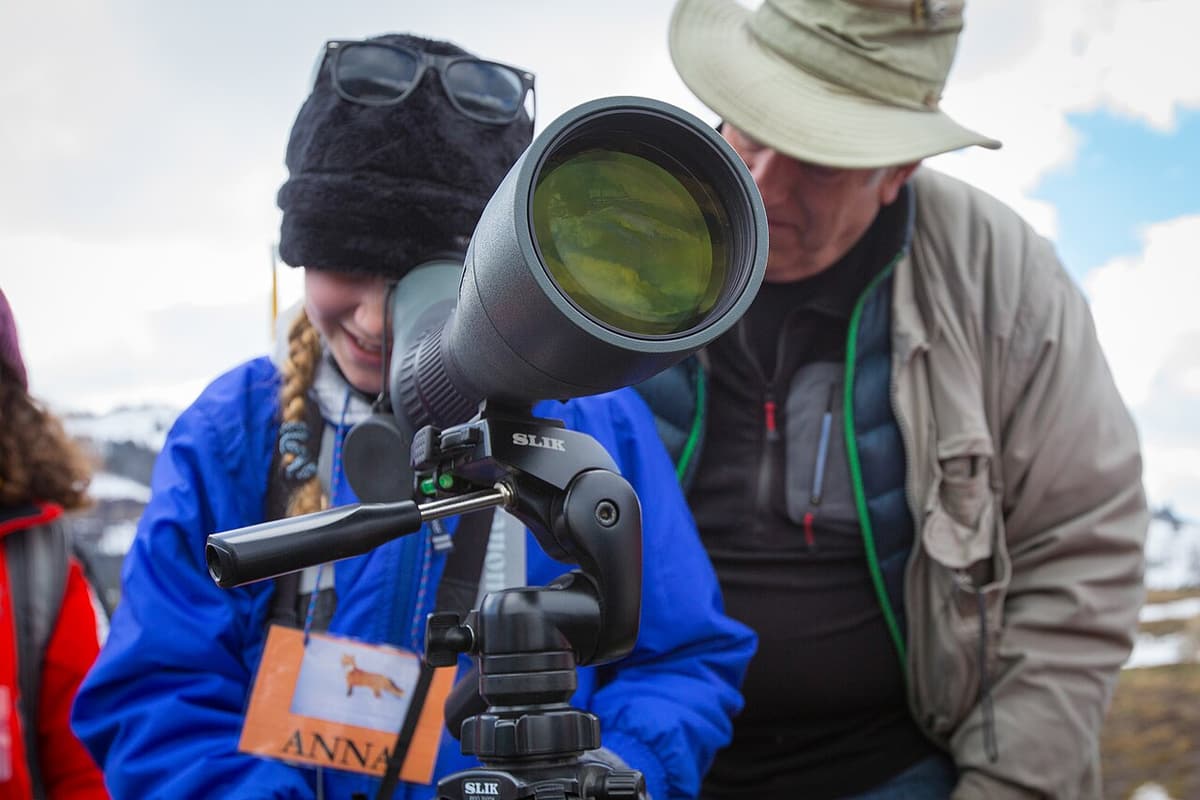
Wildlife watching on foot with local guides: you hike into the Lamar Valley and stop to scan with binoculars and a spotting scope. A different, more immersive experience than watching from the road — and safer with a guide carrying bear spray.
- Watch bison, pronghorn, bears and wolves from the trail
- Binoculars and spotting scope
- Lunch included